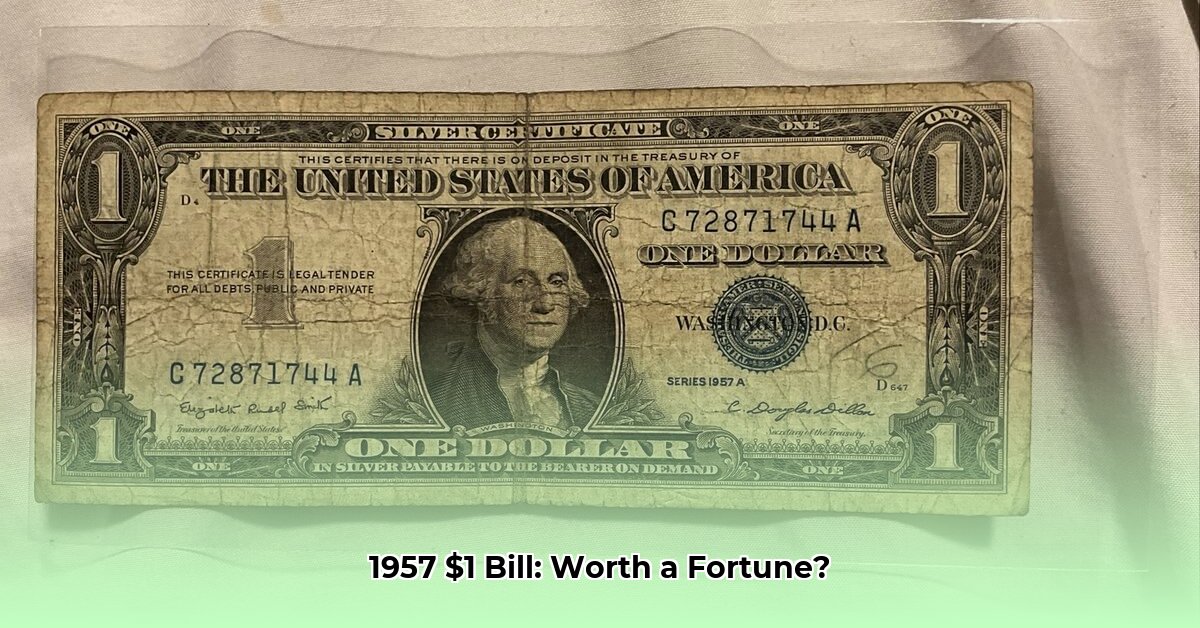
Have you unearthed a 1957 one-dollar Silver Certificate? While seemingly commonplace, these bills can hold surprising value for collectors, depending on several key factors. This guide will help you understand what makes these notes special, how to assess their worth, and what to consider if you're thinking about buying or selling.
Understanding the 1957 $1 Silver Certificate's Value
The 1957 $1 Silver Certificate isn't just ordinary currency; it's a piece of American history. Printed before the U.S. ceased issuing silver certificates, its historical significance adds to its appeal. But its value extends beyond nostalgia. Several factors significantly impact its worth: condition, series variations (1957, 1957A, 1957B), star notes, and printing errors. A pristine bill could be worth substantially more than a dollar, while a worn one might only be worth its face value. Isn't it fascinating how a simple dollar bill can hold such hidden potential?
Key Factors Affecting Value
Several critical elements determine a 1957 $1 Silver Certificate's value:
Condition: The condition is paramount. Professional grading services, such as PCGS and NGC, use standardized scales to assess a bill's condition. A perfectly preserved, uncirculated bill will fetch significantly higher prices than a heavily circulated one. How would you rate the condition of your bill?
Series Variations: Subtle differences exist between 1957, 1957A, and 1957B notes, influencing their collector value. These variations can be spotted in the printing details, indicating minor changes in the production process.
Star Notes: The presence of a small star (*) printed within the serial number designates a "star note," a replacement for a flawed original. Star notes are rarer and more valuable to collectors. Have you spotted any stars on your note?
Errors: Printing errors – misaligned printing, mismatched serial numbers, ink variations, or other anomalies – dramatically increase a bill's value. These errors are highly sought-after by collectors and can fetch hundreds or even thousands of dollars depending on rarity and severity. What errors should you look for?
How to Evaluate Your 1957 $1 Bill: A Step-by-Step Guide
Determining the value of your 1957 $1 bill requires careful evaluation using the following steps:
Assess the Condition: Examine your bill for creases, tears, stains, writing, or other imperfections, meticulously noting their severity. The fewer imperfections, the higher the potential value.
Identify the Series: Look closely at the bill's design and serial number for variations to determine if you have a 1957, 1957A, or 1957B note.
Check for Star Notes: Carefully examine the serial number area for a small star. Note that such a star is a critical feature impacting value.
Hunt for Errors: Scrutinize the bill for printing errors. Even seemingly minor imperfections could significantly increase its value.
Consider Professional Grading: For potentially valuable bills, professional grading by PCGS or NGC provides an objective assessment and adds legitimacy to the note's value. This service offers an official certification that enhances credibility and saleability.
Investing in 1957 $1 Bills: Long-Term Value and Market Trends
Predicting long-term value is challenging, yet several factors influence the continued appreciation of these notes. The ongoing interest from collectors plays a significant role. Rarity remains paramount, as does the persistent interest in American history and unique collectibles. A well-diversified portfolio mitigates risk. Collectors should monitor market trends and diversify their holdings, while dealers should prioritize acquiring notes in high-grade condition and with errors. Online marketplaces provide an effective platform to connect with buyers and sellers.
Three Pivotal Points:
- The 1957 $1 Silver Certificate's value is highly dependent on its condition and any unique features, such as star notes or printing errors.
- Professional grading adds considerable value and legitimacy to high-value notes.
- Ongoing collector interest and market trends significantly influence the long-term value of these historical bills.
The numismatic world offers intriguing possibilities, and the 1957 $1 Silver Certificate stands as a prime example. By understanding these key factors, you can unlock the hidden value in your own collection.